loongbuy Wide-Fit Walking Shoe Guide
loongbuy Wide-Fit Walking Shoe Guide
loongbuy Wide-Fit Walking Shoe Guide
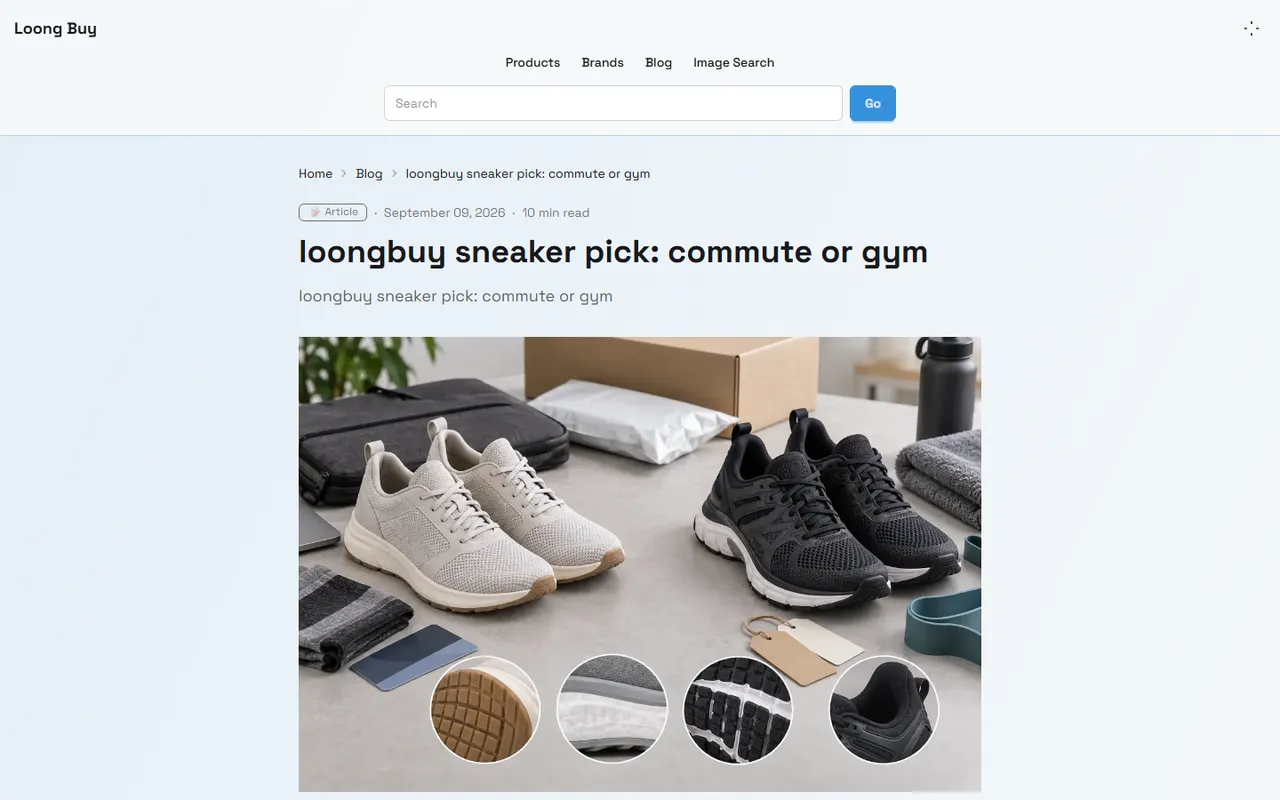
For wide-foot users choosing walking shoes, the real issue is often not "buy a size larger," but whether the toe box leaves enough horizontal and vertical room for the toes, whether the forefoot gets compressed after continuous walking, and whether the closure system can securely hold the instep.
This article is for users preparing to look for walking shoes on loong-buy.com, helping you complete candidate screening, specification checking, and pre-order risk assessment. This article does not represent that the editor personally purchased, received, or tried on any shoe; prices, inventory, sizes, materials, sellers, return/exchange conditions, and shipping costs should all be based on the information displayed on the product page and checkout page as of the verification date. The verification date of this article is September 15, 2026.
First clarify the actual needs of wide feet and prolonged walking
"Wide feet" is not a single condition. Some people have a wide forefoot but a narrow heel; some have noticeable toe splay; others experience foot widening or swelling after long periods of standing or walking. First identify your own issue to avoid simply increasing the size.
Before ordering, record three pieces of information:
The circumference of the widest part of the foot, and the corresponding foot length.
The main discomfort location: big toe side, little toe side, instep, or heel.
Typical usage scenario: commuting, travel, city sightseeing, indoor standing, or light outdoor walking.
If your foot length is appropriate but the sides of the toe box squeeze your toes, prioritize styles with more forefoot room and a more natural toe box shape. If your instep is also high, check whether the laces, Velcro, or elastic laces have adjustment margin. 👣
This method is not suitable for cases requiring orthotics, significant foot pain, or when a professional has advised specific shoe types. In such cases, follow the advice of a doctor, podiatrist, or rehabilitation specialist rather than judging support based solely on product images.
Understand last, toe box, and forefoot space information
Descriptions like "wide version," "wide-foot friendly," or "comfortable toe box" on product pages do not automatically equal standardized width. Different sellers may use these terms differently, so break down the promotional language into verifiable evidence.
Focus on the following information:
Whether foot length, insole length, or size conversion charts are provided.
Whether shoe width, forefoot width, or different width options are specified.
Whether the toe box is round, almond, square, etc.
Whether the upper is soft, stretchy, or has stiff binding.
Whether the sole has sufficient flex zones at the forefoot.
Whether separate left/right foot measurements, foot circumference measurement, or sock recommendations are provided.
If the product page only shows European sizes or numeric sizes without comparable centimeter data, do not treat adjacent sizes as width differences. Increasing size usually only increases length, which may cause the foot to slide forward and backward, increasing friction and instability. 📏
Organize verifiable specifications on loongbuy product pages
After searching for candidate shoes on loong-buy.com, it is recommended to create a brief record for each model. First record what is visible on the product page, then record questions that still need to be confirmed with the seller. Do not use search result thumbnails, tabs, or inaccessible pages as valid evidence.
Check item | Evidence to look for on product page | Handling when no evidence |
|---|---|---|
Size | Foot length, insole length, or clear size chart | Do not confirm suitable size yet |
Width | Width value, wide version option, or forefoot measurement | Do not treat "comfortable" as proof of width |
Toe box | Multi-angle images and toe box shape | Request more angles or choose another candidate |
Closure | Laces, Velcro, elastic structure, and adjustment range | Assess instep fit risk |
Return/exchange | Applicable conditions on product page or in order flow | Confirm responsibility and timeframe before ordering |
Prices, inventory, seller information, and promotions on product pages are highly volatile facts. Record the verification date when noting them, and recheck before actual payment. If the page redirects, shows blank, lacks product name, or specifications are unreadable, do not fill in with information from similar products.
Regarding platform processes, rely on the currently visible product page, shopping cart, order confirmation, and after-sales entry on loong-buy.com. Typically, you need to confirm product specifications first, then check seller and shipping information, and finally review the order amount and applicable return/exchange conditions; specific button names and available services may vary by page or region. 🛒
Use product images to observe toe box shape and closure
Images can help with initial screening but cannot prove actual interior width, cushioning, or comfort. When observing, compare multiple angles rather than relying on a single posed shot.
Focus on:
Whether the toe box curve from the upper expands outward and then suddenly narrows at the forefoot.
Whether the toe box height is restricted by stiff binding, overlays, or reinforcement.
Whether the sole forefoot and upper width are basically coordinated, or if there is obvious flaring or narrowing.
Whether the lace holes and Velcro coverage allow stable adjustment of the instep.
Whether the heel has a stabilizing structure to avoid sacrificing heel stability for width.
Do not interpret wrinkles in images as soft material, or sole thickness as cushioning. Material composition, sole structure, and weight should still be based on product page text and seller-provided information.
If images have prominent watermarks, key information is obscured, angles are insufficient, or shoe details conflict across images, mark it as needing confirmation rather than choosing the one that favors you. 🔍
Distinguish wide-foot suitability from mere size increase
To judge whether a shoe suits wide feet, check three conditions: length, width, and fixation.
Length: There should be reasonable room in front of the toes, but the foot should not slide significantly forward or backward.
Width: The widest toe joint area should not be constantly squeezed inward by the upper.
Fixation: The heel and instep must remain stable, without relying on overly tight laces to compensate for poor fit.
If only length data is available without width data, the conclusion can only be "size needs further verification," not "wide-foot suitable." If the toe box looks wide but the upper has non-adjustable stiff structure at the forefoot, retain risk judgment.
For those who need prolonged walking, it is best to consider "not tight when stationary" separately from "space after continuous walking." Sock thickness, weather, walking time, and foot swelling all change actual feel, so the more a candidate shoe relies on vague promotional claims, the more you should request specific measurements from the seller before purchase.
Pre-order size and return/exchange risk checklist
Before submitting an order, complete a review in the following order:
Record foot length and circumference in the same unit, and confirm what the size chart measures.
Confirm left/right foot differences, and assess space based on the larger foot.
Check if thick socks, insoles, or arch support are needed, and confirm if interior space allows.
Screenshot or save the size, material, price, and inventory info shown on the product page that day, but do not publicly share order numbers, phone numbers, addresses, or payment information.
Review the return/exchange time limit, conditions, shipping cost responsibility, and any special restrictions item by item.
Recheck color, size, quantity, seller, and shipping destination before payment.
If the platform or seller cannot clearly answer interior length, forefoot width, or return/exchange conditions, the safest choice is usually to keep the candidate and continue comparing, rather than gambling on a larger size. ✅
Finally retain candidate shoes more suitable for walking scenarios
In the end, don't choose the shoe with the most exaggerated description, but keep the candidate with the most complete evidence and easiest risk control. For each shoe, make a simple judgment: whether specifications are complete, whether the toe box is natural, whether the closure is adjustable, whether return/exchange conditions are clear, and whether the product page information remains valid before ordering.
If two shoes have similar width information, prioritize the one with clearer length data, more complete image angles, and more adjustable closure. If one shoe is only cheaper but lacks key size or return/exchange information, lower price does not equal lower total cost.
This checking method is more suitable for those with a relatively wide forefoot, who need urban commuting or travel walking, and are willing to measure foot data before ordering. It is not recommended to directly adopt it in the following cases: product page inaccessible, contradictory specifications, seller refuses to provide key dimensions, return/exchange responsibility unclear, or your foot condition requires professional evaluation.
The amount saved should be calculated based on verifiable actual differences, such as a more suitable size reducing exchange shipping costs, or avoiding return costs from buying the wrong size; also account for waiting time, possible reshipping fees, return/exchange restrictions, and discomfort risk. There is no universal answer for wide-foot shoe selection; the most valuable thing to retain is evidence that explains "why this suits me," rather than a seemingly larger number.
Agent Platform Shopping FAQ
1. How to evaluate product quality on loong-buy.com?
To understand product quality, check the QC photos, not just factory-provided images, which are often beautified. Through QC photos, you can verify whether the product details meet your specific requirements before placing an order. Also, do not buy extremely cheap products, as they usually have poor quality.
2. How to find the product I want on loong-buy.com?
You can search with a single keyword, or go directly to category pages, where products are also organized by brand. Longer search terms usually return fewer but more precise results than short ones. For example, you can search "Air Force 1 White", "sneakers", or just "Air Force 1".
3. What product types are available in the loong-buy.com spreadsheet?
The website spreadsheet covers shoes, clothing, bags, accessories, jerseys, perfumes, hats, scarves, belts, and various home and lifestyle products.
4. Is it safe to use the loong-buy.com spreadsheet site?
This website does not collect any personal information; it is simply a product catalog for the agent platform. All transactions are completed on the agent platform.
Browse our latest products and find your next favorite item.