loongbuy Wide-Fit Shoe Shipping Guide
loongbuy Wide-Fit Shoe Shipping Guide
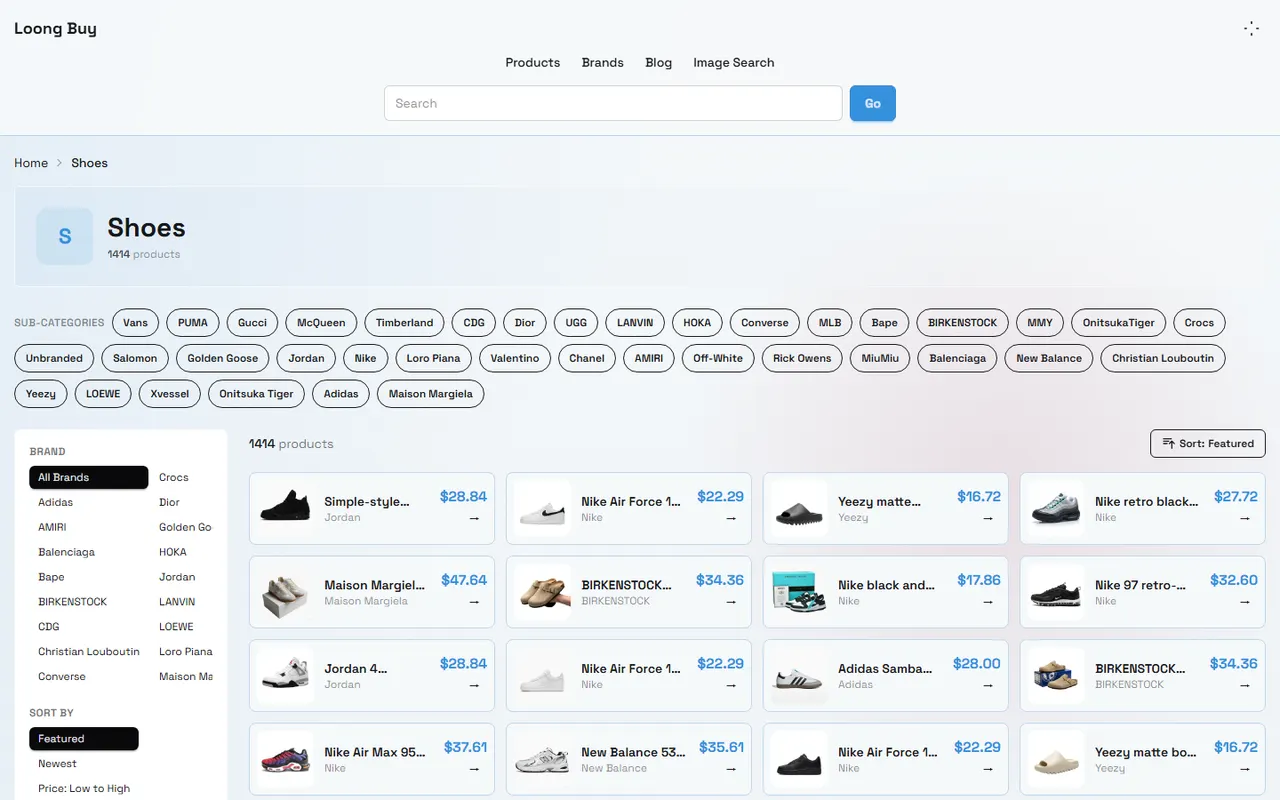
loongbuy Wide-Fit Shoe Shipping Guide: Recording Packaging Occupancy, Size Changes, and Shipping Cost Verification
Shipping costs for wide-fit shoes cannot be judged by shoe size or product name alone. Shoebox dimensions, internal fillers, external packaging, actual weight, volumetric weight, and shipping routes may all affect the final cost.
This guide addresses a specific problem: when selecting wide-fit shoes on loong-buy.com, how to record information related to packaging occupancy in advance, and verify the cost basis before ordering, warehouse inspection, and shipping.
After reading, you can build a reviewable candidate record, distinguishing between information already visible on the product page, information that needs to be confirmed with the seller or platform, and information that can only be determined after the item arrives at the warehouse.
This article does not apply to orders that have already been packed and have actual weighing data, nor does it provide fixed shipping cost commitments. Prices, inventory, packaging methods, shipping options, and fees should be based on the page and settlement results on the day of verification.📦
Clarify the Goal of Recording Shipping Costs for Wide-Fit Shoes
The goal of recording is not to guess an exact shipping cost in advance, but to avoid mixing information from different stages. It is recommended to break down cost verification into three layers:
Product page stage: Record shoe type, size range, width description, product information, and visible packaging clues.
Warehouse stage: Record actual weight after arrival, external packaging condition, shoebox dimensions, and whether repackaging is needed.
Shipping stage: Record route, billing rules, volumetric weight, additional services, and final quote.
Wide-fit shoes require special attention to size changes. Larger sizes may increase shoebox length or width, or may only change the internal space of the shoe, so you cannot infer the outer box volume based on size numbers alone. Different sellers may have completely different shoeboxes, padding methods, and packaging habits.
Your record should serve a practical decision: whether to keep the shoe, wait for warehouse measurement, choose combined packaging, or switch to a candidate with clearer packaging information.✅
Verify Shoe Type, Size, and Packaging Information from the Product Page
When viewing a product on loong-buy.com, first record the information that can be directly confirmed, and do not fill in missing fields with common sense. Focus on checking the following information:
Product name and specific shoe style, not just "wide-fit shoes".
Whether the description of the upper, sole, or style includes clear statements such as wide version, wide last, or extra wide.
Available sizes, size chart units, and whether the size chart also provides foot length or foot width.
Whether the product images clearly show the shoebox or packaging, but do not treat image observation as official packaging specifications.
Whether the product details state shoebox, boxless packaging, alternative packaging, or other packaging requirements.
Whether the product page shows inventory, specification options, seller information, or other fields that may affect ordering decisions.
Whether the page is accessible normally, and the product name and visible information are sufficient to support recording.
If the page does not specify shoebox dimensions, record it as "not provided" and do not fill in an estimated value. If the image appears to show a shoebox, record it only as "image suggests a shoebox may exist" and still need to wait for warehouse or seller confirmation.
At the product page stage, you can use the following recording framework:
Record Field | Content to Record | Handling When Missing |
|---|---|---|
Shoe Type and Width | Shoe type, wide version, or wide last information explicitly written on the page | Mark as not specified, do not judge on your own |
Size Information | Size, foot length, foot width, and units | Keep original units, convert later if necessary |
Packaging Clues | Packaging information explicitly appearing in page text or images | Distinguish between text description and image observation |
Specification Status | Available specifications, inventory, and page accessibility status | Based on the results on the day of verification |
Items to Confirm | Shoebox, fillers, weight, and dimensions | Ask seller or platform before arrival |
The verification date should also be saved. Packaging and inventory are information that may change, and a single viewing result cannot be treated as a long-term valid commitment.🗓️
Why You Cannot Infer Packaging Volume Solely from Shoe Size
Shoe size is only one specification of the shoe and does not equal the external dimensions of the packaging. At least four variables cause differences:
First, shoeboxes do not necessarily change proportionally with shoe size. Some shoeboxes maintain a uniform specification, while others adjust dimensions based on shoe type, upper height, or brand packaging.
Second, the "width" of wide-fit shoes may be reflected in the last, upper structure, or internal space, and does not necessarily directly increase every edge of the shoebox. Without actual measurement data, you cannot convert foot width changes directly into packaging volume.
Third, the shoe itself may have additional fillers, such as paper balls, shoe trees, foam, or anti-deformation materials. These materials may affect the internal occupancy of the shoebox, but do not necessarily change the external dimensions; if alternative packaging is used, weight and volume may also change.
Fourth, after warehouse repackaging, the final billing object may no longer be the original shoebox. Whether to keep the original box, whether to combine packages, and whether to add cushioning materials can all change the outer box size and billing method.
Therefore, the correct approach is to record "size changes" and "packaging changes" separately. Size is used to identify product specifications, while packaging information requires product page descriptions, seller responses, or warehouse measurements.📏
Record Shoebox, Fillers, and External Packaging Clues Separately
To make subsequent verification clearer, packaging can be divided into three layers.
Shoebox
Record whether the page explicitly states that a shoebox is included, or whether a shoebox is visible in the image. Do not infer solely from brand conventions. Also ask whether the shoebox will be shipped with the goods, and whether the shoebox may be replaced for shipping protection.
If shoebox dimensions are not published, leave three blank fields: length, width, and height. Fill in actual measurement data after the warehouse receives the item.
Shoe Fillers
Record whether the page mentions shoe trees, paper balls, foam, or other protective materials. Internal fillers usually affect shoe shape protection and weight rather than directly determining outer box volume, so do not write "has fillers" as "larger volume".
External Packaging
Record whether the seller specifies bag, carton, bubble protection, or other external packaging. If the page does not specify, mark as unknown. Final external packaging usually can only be confirmed after warehouse processing, especially for orders with combined packaging or repackaging.
This layered recording avoids a common mistake: seeing a shoebox in the product image and treating it as the final shipping packaging; or seeing a larger size and directly assuming higher shipping costs. Both judgments lack actual measurement basis.
Use a Candidate Table to Compare Information Completeness Rather Than Guessing Specific Shipping Costs
When comparing multiple wide-fit shoes, the purpose of the candidate table is to identify products with higher information completeness and easier subsequent verification, rather than prematurely declaring which pair has the lowest shipping cost.
For each candidate, you can record the following:
Product name and page verification date.
Whether the width or shoe type description is clear.
Whether the size chart includes foot length, foot width, and units.
Whether shoebox information is clearly stated, image clue, or completely missing.
Whether internal fillers and external packaging are described.
Weight and dimension fields that must be supplemented after arrival.
Unconfirmed items that have a significant impact on shipping costs.
When comparing, prioritize candidates with clear record boundaries. For example, one pair may have no packaging description but complete size information on the product page; another pair may have shoebox images but no clear size chart. The two cannot be compared simply by "looks better packaged" but should be marked separately for information gaps.
If there is no actual weight and dimensions between candidates, do not write "this pair will definitely save shipping costs". A more reliable conclusion is: "Current page information is insufficient to compare final shipping costs; need to wait for warehouse measurement or obtain a clear quote."
Inquiry Checklist When Packaging Information for Wide-Fit Shoes Is Missing
When packaging information cannot be confirmed on the product page, you can ask about actionable issues:
Will this size be shipped with the shoebox?
Is the shoebox the original packaging, or will the seller use other packaging?
Are there shoe trees, paper balls, or other fillers inside the shoe?
Will external protective materials be added before shipping?
Is it possible that the shoebox or packaging will be changed due to size variations?
After the item arrives, can the platform provide actual weight and external dimensions?
If combined packaging is needed, can I choose to keep or remove the shoebox?
Will repackaging incur service fees or change the chargeable weight?
When asking, do not just ask "how much is shipping". Also ask about billing basis, applicable route, destination country or region, currency, quote validity period, and whether there are additional services. Destination country taxes, import restrictions, and customs documentation cannot be inferred from packaging dimensions; they must be confirmed according to destination rules and actual shipping plans.🌍
Review Weight, Volume, and Shipping Options Before Ordering
Before placing an order, you can do a three-stage review.
The first stage is product review: confirm that the selected size, width, color, and inventory status match the record. If the size chart uses centimeters, inches, or other units, keep the original units to avoid losing context during conversion.
The second stage is packaging review: confirm which of the shoebox, fillers, and external packaging are known and which are still unknown. Unknown fields should be clearly listed, and do not replace them with estimated values when preparing to pay.
The third stage is shipping review: wait until actual weight, dimensions, or route quotes are available, then compare shipping options. Note that actual weight and volumetric weight may use different billing methods, subject to the platform's current displayed rules.
If considering combined packaging, all packages' weight, dimensions, package value, and route restrictions should be included in the judgment. Combined packaging may reduce duplicate first weight or partial operation costs, but may also increase volumetric weight, risk of loss per shipment, or package value. Separate packaging may increase fixed costs, but sometimes can resolve route restrictions or reduce loss per shipment.
Therefore, "combined packaging always saves money" cannot be taken as a default conclusion. First obtain sample data, then compare total cost, potential risks, and acceptability before and after combining.📦
Next Step: Choose Wide-Fit Shoe Candidates with Clear Record Boundaries
After completing product page records, prioritize keeping candidates of the following types:
Width or shoe type description is clear, and size chart units are clear.
Product name, specifications, and page status can be reviewed on the verification date.
Packaging information is incomplete, but missing fields can be confirmed through seller, platform, or warehouse processes.
After arrival, actual weight, external dimensions, and packaging handling results can be supplemented.
Shipping options and fee basis can be viewed before shipping, rather than only guessed from experience.
The following practices are not recommended:
Judge packaging volume and final shipping cost solely by shoe size.
Use packaging dimensions from other sellers or other shoe models to replace current product data.
Treat the shoebox in product images directly as the final shipping outer box.
Claim that a candidate is definitely the cheapest without actual quotes.
Use undervaluation, order splitting to avoid taxes, or evasion of inspection to reduce costs.
The value of this recording method is to let you know what is missing when information is insufficient, rather than creating a seemingly precise number. After completing warehouse measurements, add actual weight, dimensions, packaging handling, and shipping quotes back into the same record to determine whether a packaging plan truly saves money.
If combined packaging reduces duplicate first weight or partial operation fees, record the actual amount saved; also record the increased volumetric weight, concentrated package value, route restrictions, and risk of loss per shipment. This plan is more suitable for buyers with multiple packages of similar size, allowed routes, and ability to accept concentrated risk. It is not recommended to combine packages directly solely for potential savings when actual measurements are lacking, destination restrictions are unclear, or single item value is high.
Agent Platform Shopping FAQ
1. What kinds of products are available on loong-buy.com?
loong-buy.com provides a broad selection of categories, such as footwear, tees, sweaters, hooded tops, denim, joggers, shorts, swim trunks, factory clearance deals, puffer coats, baseball jerseys, button-up shirts, caps, accessories, bags, gadgets, sunglasses, socks, undergarments, and popular collectibles.
2. What is the best way to find a specific product on loong-buy.com?
You may enter a single keyword or navigate straight to a category page, where items are sorted by brand as well. Generally, longer search phrases yield fewer results than shorter ones but give better accuracy. For instance, you could look up "Air Force 1 White," "sneakers," or just "Air Force 1."
Browse our latest products and find your next favorite item.